
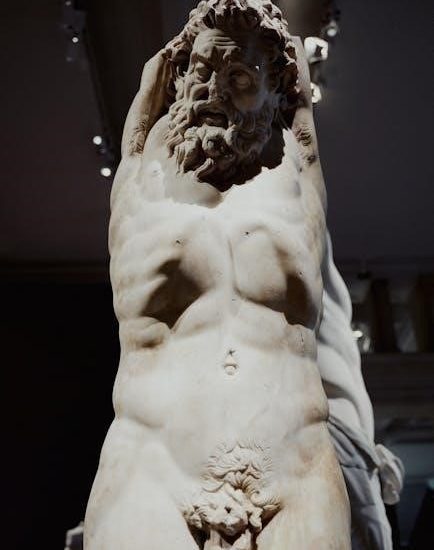
Greek myths, brimming with heroes, gods, and terrifying monsters, are readily accessible today through numerous PDF resources. These digital texts preserve ancient narratives!
The Enduring Appeal of Greek Mythology
Greek mythology continues to captivate audiences across generations, its stories resonating with universal themes of love, loss, courage, and betrayal. The tales of powerful gods like Zeus and Hera, valiant heroes such as Heracles and Perseus, and fearsome monsters like Medusa and the Minotaur, offer compelling narratives exploring the human condition.
The accessibility of these myths through PDF formats and digital resources has further fueled their enduring popularity. These readily available texts allow for convenient study and exploration of these ancient stories. The archetypes presented – the hero’s journey, the tragic flaw, the battle between good and evil – remain profoundly relevant in modern literature, art, and psychology. The myths provide a rich tapestry of symbolism and allegory, inviting ongoing interpretation and adaptation, ensuring their continued influence for years to come.
Sources for Studying Greek Myths: The Role of PDFs
PDF documents have become invaluable resources for studying Greek myths, offering convenient access to translations and scholarly analyses of tales featuring heroes, gods, and monsters. Digital libraries and online repositories host numerous collections, including retellings by authors like Edith Hamilton and Robert Graves.
These PDFs often contain detailed notes, commentaries, and genealogical charts, aiding comprehension of complex relationships between deities and mortals. The portability of PDFs allows for study anywhere, anytime. Furthermore, searchable PDFs facilitate quick location of specific myths or characters. Reliable sources include university websites, Project Gutenberg, and dedicated mythology archives, ensuring access to accurate and well-researched materials for exploring these timeless narratives.
The Olympian Gods
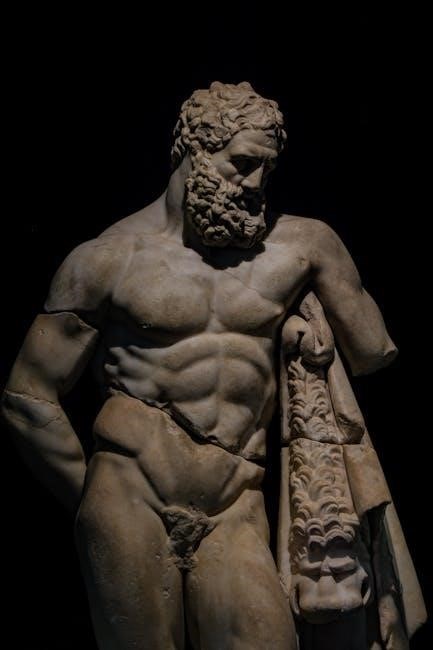
PDF resources detail the powerful Olympian gods – Zeus, Hera, Poseidon, and Hades – and their interactions with heroes and fearsome monsters.
Zeus: King of the Gods and Ruler of the Sky
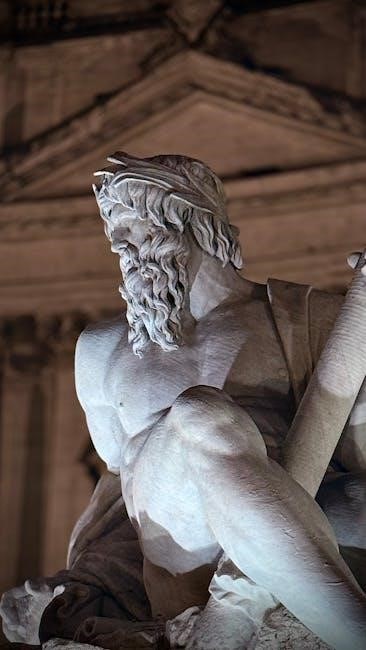
Zeus, the supreme ruler of the Olympian gods, dominates many Greek myths readily available in PDF format. These texts portray him wielding immense power, controlling the sky, thunder, and lightning. He isn’t solely benevolent; PDF narratives reveal his complex character, showcasing both justice and infidelity.
His interactions with heroes, like Heracles (often a son of Zeus), are central to many tales. PDFs detail his interventions, sometimes aiding, sometimes hindering their journeys. The stories also explore his conflicts with monsters, often dispatched to test or punish mortals. Examining these PDF resources provides a comprehensive understanding of Zeus’s multifaceted role within the mythological landscape, illustrating his authority and influence over both gods and humankind.
Hera: Queen of the Gods and Goddess of Marriage
Hera, wife and sister of Zeus, reigns as the Queen of the Gods and protector of marriage, extensively detailed in accessible Greek myths PDF collections. However, these PDFs reveal a complex figure, often driven by jealousy due to Zeus’s numerous infidelities. Her wrath frequently targets the offspring of Zeus’s affairs, creating obstacles for many heroes.
PDF narratives showcase Hera’s relentless pursuit of vengeance, sometimes against innocent mortals. While a goddess of marriage, her own relationship is fraught with conflict. The stories also depict her occasional support of heroes who align with her interests. Studying these PDF resources provides a nuanced understanding of Hera’s power, her motivations, and her significant role in shaping the destinies of gods, heroes, and even fearsome monsters.
Poseidon: God of the Sea, Earthquakes, and Horses
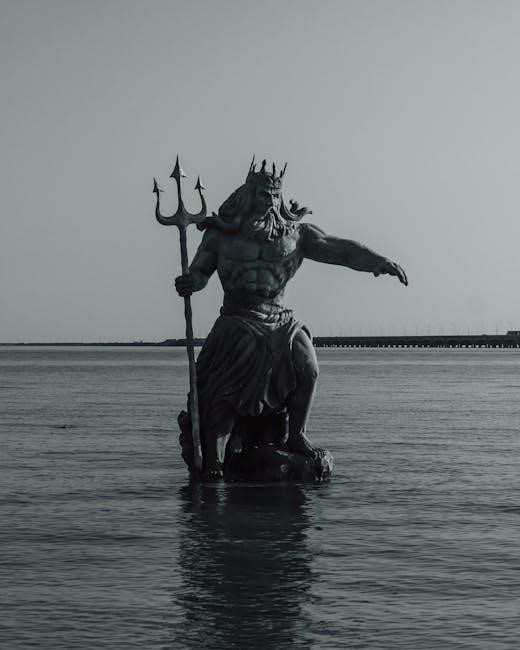
Poseidon, brother of Zeus and Hades, commands the seas, triggers earthquakes, and has dominion over horses – all vividly portrayed within comprehensive Greek myths PDF compilations. These PDF texts detail his volatile temperament and immense power, often clashing with other gods and impacting mortal lives.
Numerous tales within these PDFs feature Poseidon’s interventions, both benevolent and destructive. He’s known for creating islands and springs, but also for unleashing devastating storms and earthquakes. His connection to horses is also prominent, often gifting them to heroes or creating them through magical means. Exploring these PDF resources reveals Poseidon as a formidable deity, shaping the world and influencing the journeys of heroes and the emergence of mythical monsters.
Hades: God of the Underworld
Hades, often misunderstood, reigns over the realm of the dead, a crucial component of Greek mythology extensively documented in available PDF collections. These PDFs reveal him not as evil, but as a stern and unwavering ruler maintaining the balance between worlds. He’s rarely depicted leaving his kingdom, yet his influence permeates mortal existence.
Within these digital texts, you’ll discover tales of heroes venturing into the Underworld, facing trials set by Hades and navigating its treacherous landscapes. The PDFs detail the various creatures inhabiting his realm, including monsters and shades of the deceased. Studying these narratives through PDFs provides a deeper understanding of ancient beliefs surrounding death, fate, and the afterlife, showcasing Hades’ vital role in the cosmic order.
Prominent Greek Heroes
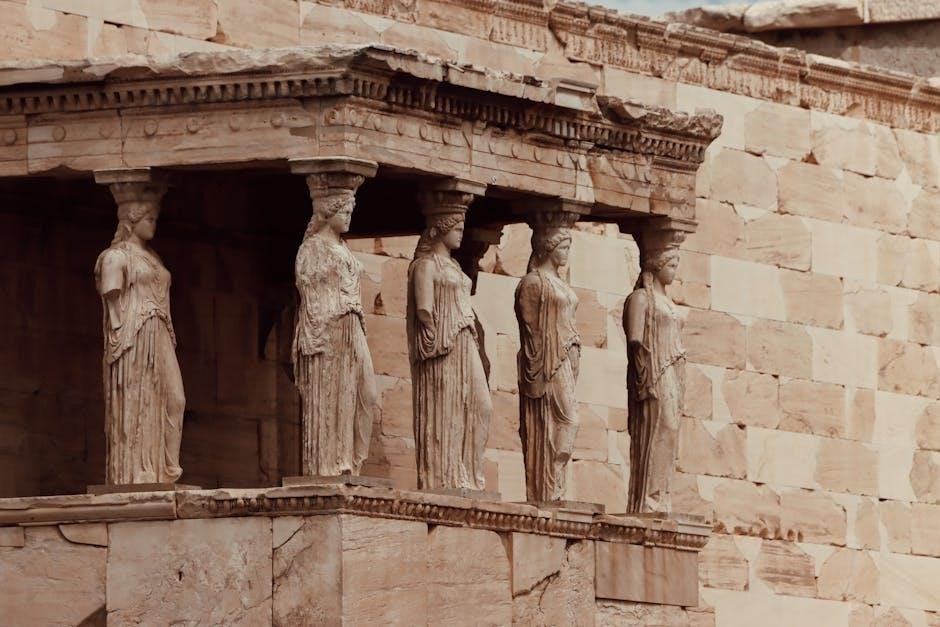
Greek heroes, like Heracles and Perseus, feature prominently in PDFs detailing their incredible feats against monsters and the will of the gods.
Heracles (Hercules): The Paragon of Strength
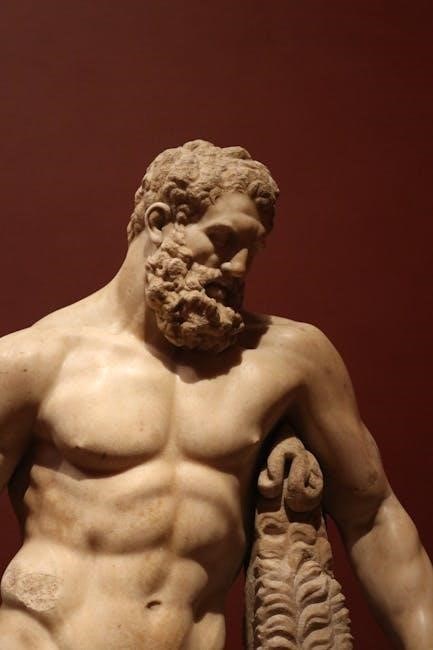
Heracles, known to the Romans as Hercules, embodies unparalleled strength and is a central figure in numerous Greek myths, extensively documented in available PDFs. His story, often involving overcoming seemingly impossible challenges set by the gods – particularly Zeus and Hera – resonates deeply within the cultural narrative.
These PDF resources detail his famed Twelve Labors, each a testament to his extraordinary power and resilience. From slaying the Nemean Lion to capturing Cerberus, the guardian of the Underworld, Heracles’ adventures are filled with encounters with fearsome monsters. Studying these texts provides insight into the ancient Greek ideals of heroism, suffering, and redemption. The digital format allows for easy access to various interpretations and scholarly analyses of this iconic hero’s journey.
Perseus: Slayer of Medusa
Perseus’s tale, vividly recounted in numerous Greek myths available as PDF documents, centers around his daring quest to slay Medusa, the Gorgon whose gaze turned men to stone. This heroic narrative showcases courage, divine assistance, and cleverness, making Perseus a compelling figure in ancient lore.
PDFs detailing Perseus’s journey reveal he received aid from various gods, including Athena and Hermes, who equipped him with tools crucial for his success – a mirrored shield, winged sandals, and a sickle. The story highlights his confrontation with dangerous monsters beyond Medusa, solidifying his status as a formidable hero. These digital texts offer detailed accounts of his adventures, providing valuable insights into ancient Greek beliefs about fate, heroism, and the power of the divine.
Theseus: The Hero of Athens and the Minotaur
Theseus, a central figure in Athenian mythology, is famously known for his courageous venture into the Labyrinth to defeat the Minotaur. Numerous PDF resources dedicated to Greek myths comprehensively detail this heroic feat, showcasing Theseus’s bravery and strategic thinking. The story embodies themes of justice, sacrifice, and the triumph of order over chaos.
PDF analyses of the myth reveal Ariadne’s crucial role, providing Theseus with a thread to navigate the labyrinth and ultimately slay the half-man, half-bull monster. Divine intervention, particularly from Athena, also played a part in his success. These digital texts offer detailed accounts of Theseus’s journey, exploring the political and cultural context of ancient Athens and the enduring power of this iconic myth.
Jason: Leader of the Argonauts
Jason, renowned as the leader of the Argonauts, embarked on a perilous quest to retrieve the Golden Fleece. Detailed accounts of his adventures are readily available in numerous PDF compilations of Greek myths, offering insights into the challenges and triumphs of this legendary hero. The journey itself is a cornerstone of Greek storytelling, filled with encounters with both helpful deities and formidable foes.
PDF analyses highlight the significant assistance Medea, a powerful sorceress, provided to Jason. Her magical abilities were instrumental in overcoming obstacles and securing the Fleece. These digital resources explore the complex relationship between Jason and Medea, and the tragic consequences that followed. The myth explores themes of ambition, betrayal, and the price of achieving glory, all meticulously documented within these accessible texts.
Iconic Greek Monsters
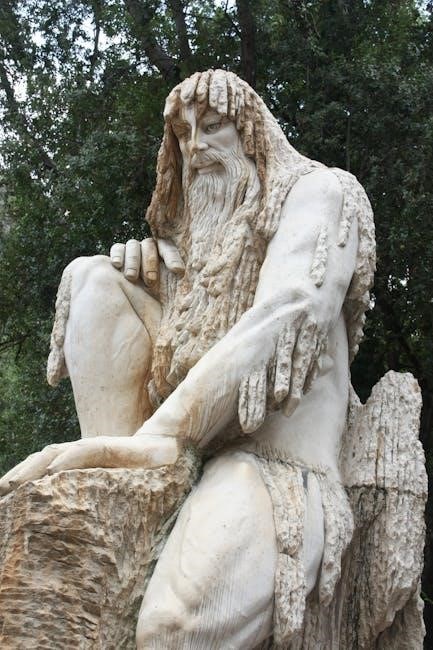
Greek monsters like Medusa and the Minotaur populate thrilling myths, easily explored through comprehensive PDF collections detailing heroic encounters and monstrous origins.
Medusa: The Gorgon with Snakes for Hair
Medusa, a terrifying Gorgon, is famed for her venomous snakes instead of hair and a gaze that could turn onlookers to stone. Originally a beautiful priestess of Athena, she was cursed by the goddess after Poseidon violated her within Athena’s temple. Numerous PDF resources detail her tragic story and monstrous transformation.
These digital texts explore Perseus’ daring quest to slay Medusa, guided by Athena and Hermes. They meticulously describe the tools he utilized – a mirrored shield, winged sandals, and a sickle – to avoid her petrifying gaze. PDF analyses often delve into the symbolism of Medusa, representing both danger and protective power; Her head, even after death, retained its power and was used as a weapon by Perseus, further documented in accessible PDF myth collections.
The Minotaur: Half-Man, Half-Bull
The Minotaur, a creature of immense strength and terrifying appearance – half-man, half-bull – resided within the Labyrinth on Crete. Born from the union of Pasiphae, wife of King Minos, and a magnificent white bull sent by Poseidon, it demanded a gruesome tribute: human sacrifices. Detailed accounts of this myth are readily available in numerous PDF formats.
Theseus, the heroic son of King Aegeus, volunteered to enter the Labyrinth and slay the Minotaur. PDF analyses explore his journey, aided by Ariadne, who provided him with a ball of thread to navigate the maze and a sword to defeat the beast. These digital resources often highlight the symbolism of the Minotaur, representing primal instincts and the darker side of human nature, meticulously preserved within accessible PDF myth collections.
The Hydra: The Multi-Headed Serpent
The Hydra, a formidable monster in Greek mythology, possessed multiple heads, and each time one was severed, two more would grow in its place. This monstrous serpent dwelled in the swamps of Lerna, posing a significant threat to the surrounding lands. Comprehensive details regarding the Hydra and its defeat are frequently found within accessible PDF compilations of Greek myths.
Heracles (Hercules), as part of his twelve labors, was tasked with slaying the Hydra. PDF analyses detail how he, with the assistance of his nephew Iolaus, cauterized the neck stumps after each head was cut off, preventing regrowth. These digital texts often explore the symbolism of the Hydra, representing the persistence of evil and the challenges of overcoming seemingly insurmountable obstacles, all readily available in detailed PDF formats.
Cerberus: The Guardian of the Underworld
Cerberus, the monstrous multi-headed dog, served as the fearsome guardian of the gates to the Underworld, preventing the dead from leaving and the living from entering without permission. Descriptions of Cerberus’ terrifying appearance – often depicted with three heads and a serpent’s tail – are vividly detailed in numerous PDF collections of Greek mythology.
Heracles famously faced Cerberus as his twelfth and final labor, requiring him to capture the beast and bring it to the surface. PDF resources often analyze this feat, highlighting Heracles’ incredible strength and courage. These digital texts explore the symbolic significance of Cerberus, representing the finality of death and the boundaries between worlds, readily accessible through downloadable PDF versions of classic myths.
Key Mythological Creatures
PDFs detail fascinating creatures like Cyclopes, Satyrs, and Sirens, integral to Greek myths, showcasing their unique roles and captivating stories within ancient lore.
Cyclopes: One-Eyed Giants
Cyclopes, formidable one-eyed giants, feature prominently in Greek mythology, often depicted as primitive yet powerful beings. PDF resources dedicated to Greek myths detail their origins, frequently linking them to the Titans or primordial deities. The most famous encounter involves Odysseus, who cleverly blinds Polyphemus, a son of Poseidon, to escape his cave – a tale vividly recounted in many digital texts.
These PDFs explore the varying depictions of Cyclopes; some are portrayed as skilled craftsmen, forging Zeus’s thunderbolts, while others are savage and uncivilized. Examining these texts reveals the cultural anxieties surrounding strength, intelligence, and the untamed wilderness embodied by these giants. Detailed illustrations and scholarly analyses within these PDFs offer a comprehensive understanding of their significance.
Satyrs: Companions of Dionysus
Satyrs, mythical creatures with the upper body of a man and the legs and ears of a goat, are intrinsically linked to Dionysus, the god of wine, fertility, and theatre. Numerous PDFs dedicated to Greek mythology explore their role as wild, hedonistic companions, often depicted engaging in revelry and chasing nymphs. These digital texts detail their association with untamed nature and ecstatic religious practices.
PDF resources showcase the Satyrs’ dual nature – playful and mischievous, yet also capable of representing primal instincts. Scholarly analyses within these documents examine their symbolic significance, connecting them to themes of liberation and the blurring of boundaries. Illustrations in these PDFs often portray them playing pipes and dancing, embodying the joyous, chaotic spirit of Dionysian worship, offering a rich understanding of their cultural context.
Sirens: Enchanting and Deadly Creatures
Sirens, captivating yet dangerous creatures from Greek mythology, are famously known for their irresistible songs that lured sailors to their doom. Many PDFs detailing Greek myths vividly recount the tale of Odysseus, who famously resisted their call by having his men bind him to the mast. These digital resources explore the Sirens’ origins, often depicted as having the bodies of birds and the heads of women.
PDF analyses delve into the symbolism of the Sirens, interpreting them as representations of temptation and the perils of unchecked desire. Scholarly texts within these PDFs examine how their story served as a cautionary tale about resisting alluring, yet destructive forces. Illustrations in these documents often portray their haunting beauty and the wrecked ships surrounding their rocky island, offering a chilling glimpse into their deadly power.
Exploring Myths Through PDFs and Digital Resources
PDFs offer convenient access to Greek myths featuring heroes, gods, and monsters. Digital resources provide scholarly analysis and preserve ancient narratives effectively!
Benefits of Using PDF Formats for Mythological Texts
PDFs are exceptionally well-suited for studying Greek myths concerning heroes, gods, and monsters. Their format ensures consistent presentation across devices, preserving original formatting and scholarly annotations crucial for accurate interpretation.
Unlike other digital formats, PDFs maintain layout integrity, vital when examining texts with complex structures or illustrations depicting mythological scenes. They are easily searchable, allowing quick access to specific characters, events, or themes.
Furthermore, PDFs are portable and readily shareable, facilitating collaborative study and research. Many online archives and libraries offer Greek myth collections in PDF format, making these ancient stories accessible to a wider audience. The ability to highlight, annotate, and bookmark within a PDF enhances the learning experience, fostering deeper engagement with the material.
Reliable Online Sources for Greek Myth PDFs
Several reputable online platforms offer PDFs detailing the tales of Greek heroes, gods, and fearsome monsters. Project Gutenberg (https://www.gutenberg.org/) provides free ebooks, including classic translations of mythological texts, often available as PDF downloads.
Theoi Project (https://www.theoi.com/) is a comprehensive resource with detailed information and source material, sometimes offered in downloadable PDF summaries. Internet Archive (https://archive.org/) hosts a vast collection of digitized books, including many older works on Greek mythology in PDF format.
University websites and digital libraries frequently provide access to scholarly articles and translations as PDFs. Always verify the source’s credibility and the translator’s reputation when studying these ancient narratives to ensure accuracy and insightful interpretations of these enduring stories.
Navigating and Analyzing Mythological PDFs
When exploring PDFs of Greek myths featuring heroes, gods, and monsters, effective navigation is key. Utilize the PDF reader’s search function to locate specific characters, events, or themes. Pay attention to the translator’s notes and introductions, as they provide valuable context.
Cross-reference information across multiple PDF sources to identify variations in storytelling and interpret different perspectives. Analyze the narrative structure – how are heroes’ journeys presented? How are gods’ powers depicted? What symbolic meanings are embedded within the monsters?
Consider the historical context of the translation; older versions may reflect Victorian sensibilities. Critical analysis enhances understanding of these timeless tales and their enduring cultural impact.
The Legacy of Greek Myths
PDFs ensure the survival of tales about heroes, gods, and monsters, profoundly influencing art, literature, and modern culture with archetypal narratives.
Influence on Art, Literature, and Culture
Greek myths, easily studied via accessible PDFs, have indelibly shaped Western artistic and literary traditions. From Renaissance paintings depicting scenes of heroes like Heracles to modern novels reimagining the struggles of gods like Zeus, the influence is pervasive. The dramatic narratives of monsters – Medusa, the Minotaur, Cerberus – continue to inspire creative works across mediums.
Literature frequently draws upon mythological archetypes, exploring themes of fate, heroism, and the human condition. Visual arts showcase iconic imagery, while musical compositions and theatrical productions frequently adapt these ancient stories. Even contemporary film and gaming industries heavily borrow from the rich tapestry of Greek mythology, demonstrating its enduring cultural relevance. PDF formats allow for widespread access to these foundational stories, fostering continued inspiration.
Modern Interpretations of Greek Myths
PDFs of Greek myths facilitate exploration of their evolving interpretations. Contemporary authors and artists frequently reimagine the tales of heroes, gods, and monsters, offering fresh perspectives on timeless themes. These reinterpretations often explore psychological complexities, challenging traditional heroic narratives and questioning the morality of the Olympian pantheon.
Modern adaptations frequently focus on the female characters within the myths, giving voice to figures previously marginalized. The monstrous figures, like Medusa, are often re-evaluated, presented as victims rather than villains. These reinterpretations, readily available through digital resources, demonstrate the myths’ adaptability and continued relevance. They allow for critical engagement with ancient narratives, prompting discussions about power, gender, and societal values, ensuring the stories remain vibrant and thought-provoking.
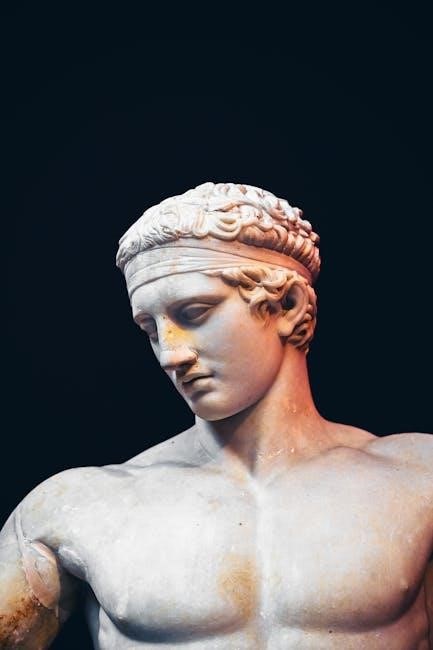
Continuing Relevance of Heroic Archetypes
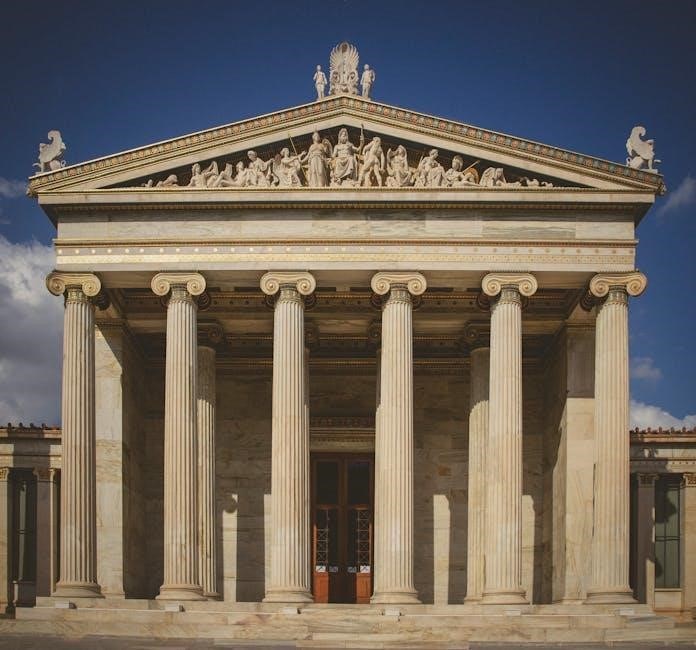
PDFs containing Greek myths reveal the enduring power of heroic archetypes. Figures like Heracles, Perseus, and Theseus embody universal struggles with fate, mortality, and the pursuit of glory. These archetypes resonate deeply within the human psyche, appearing repeatedly in literature, film, and popular culture.
The challenges faced by these heroes – overcoming monstrous obstacles, confronting divine wrath, and grappling with personal flaws – mirror contemporary human experiences. Even the gods and monsters represent fundamental aspects of the human condition: ambition, jealousy, fear, and the unknown. Studying these myths through accessible PDF formats allows for a deeper understanding of these archetypes and their continued influence on storytelling and our collective imagination, proving their timeless appeal.