

Ryobi Miter Saw Manual: A Comprehensive Guide
Navigating Ryobi miter saw operation‚ parts lists (like TS1351)‚ and troubleshooting is simplified with readily available online manuals and diagrams for models BS-916B/BS-1018B.
Understanding Ryobi Miter Saw Models
Ryobi offers a diverse range of miter saws‚ catering to both DIY enthusiasts and professional tradespeople. Models vary significantly in features‚ power‚ and cutting capacity. Key distinctions lie within the series – from compact‚ portable options like the TSS120L‚ TSS121‚ and TSS121T‚ ideal for smaller projects and job site mobility‚ to more robust compound miter saws such as the TS1351‚ designed for larger cuts and increased precision.
Understanding these differences is crucial when selecting a manual or seeking replacement parts. Furthermore‚ models like the BS-916B and BS-1018B (metal cutting band saws) demonstrate Ryobi’s broader cutting tool offerings. Always confirm the specific model number‚ often found on the motor housing‚ to ensure compatibility with documentation and accessories.
Identifying Your Specific Ryobi Miter Saw Model Number
Locating your Ryobi miter saw’s model number is the first step towards accessing the correct manual and parts information. This unique identifier is essential for accurate troubleshooting‚ ordering replacement components (like the MS1065LZ guard washer)‚ and understanding your saw’s specific capabilities. Typically‚ the model number is affixed to a plate or sticker directly on the motor housing.
Examples include TS1351‚ TSS120L‚ TSS121‚ TSS121T‚ BS-916B‚ and BS-1018B. For models like the AP1300 planer‚ the plate is also on the motor housing. Carefully inspect all sides of the saw‚ paying close attention to areas near the power switch and base. Having this number readily available streamlines the process of finding relevant documentation online or contacting Ryobi support.
Accessing Ryobi Miter Saw Manuals Online
Numerous online resources provide access to Ryobi miter saw manuals and parts lists. Searching for your specific model number (e.g.‚ TS1351‚ TSS120L) will yield relevant PDF documents detailing operation‚ maintenance‚ and component diagrams. Websites often host manuals for models like BS-916B/BS-1018B band saws and even older models like the 1433FH fixed head saw.
Parts breakdowns‚ such as those for the S652DG sander or BGH6110SB bench grinder‚ can also be found. These resources are invaluable for blade replacement‚ understanding miter and bevel adjustments‚ and resolving common issues. Remember to verify the manual corresponds to your exact model for accurate information and safe operation.
Safety Precautions for Ryobi Miter Saws
Prioritizing safety is paramount when operating a Ryobi miter saw. Always disconnect the power source before performing any maintenance‚ like blade replacement or adjustments. Wear appropriate eye and face protection to shield against debris. Ensure the workpiece is securely clamped to prevent movement during cutting.
Familiarize yourself with the saw’s safety features‚ including the blade guard (and replacement parts like MS1065LZ)‚ and never bypass them. Maintain a clean work area‚ free from obstructions. Regularly inspect the power cord for damage. Refer to your model’s manual (TS1351‚ TSS120L) for specific safety guidelines and warnings to prevent accidents.
Key Components of a Ryobi Miter Saw
Ryobi miter saws comprise several essential components working in unison. The core is the blade‚ requiring careful selection based on the material being cut. Precise miter and bevel adjustments are crucial for angled cuts‚ facilitated by locking mechanisms. A robust fence and support system ensures stable workpiece handling during operation.
The power switch controls operation‚ while models may include a laser guide for enhanced accuracy. Understanding these components – as detailed in manuals for models like BS-916B/BS-1018B and TS1351 – is vital for proper use and maintenance. Replacement parts‚ including guards (MS1065LZ)‚ are readily available.
Blade Types and Selection
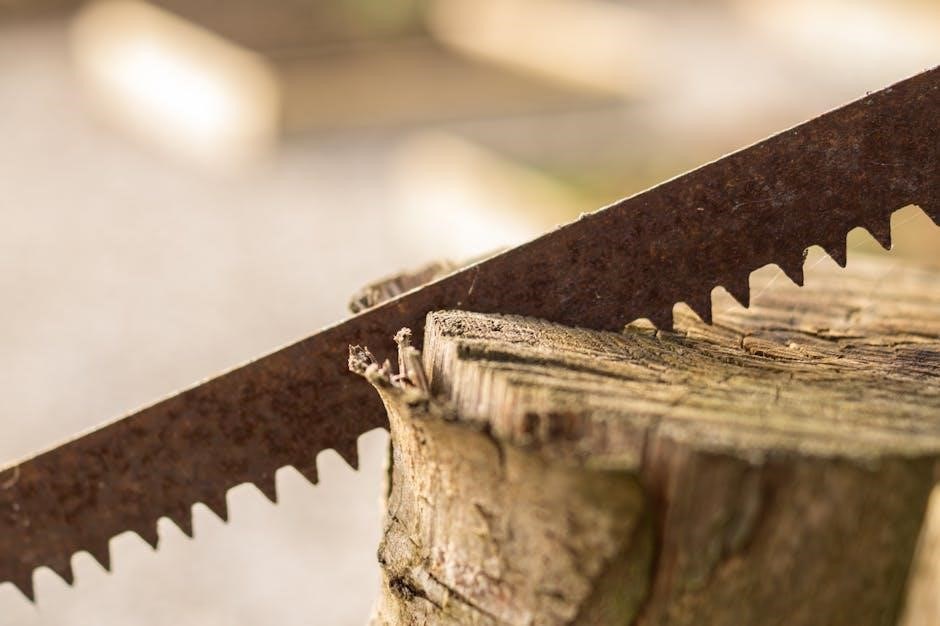
Choosing the correct blade is paramount for optimal Ryobi miter saw performance. Different materials demand specific blade geometries. For wood‚ general-purpose blades with numerous teeth provide clean cuts. Abrasive blades are essential for cutting non-ferrous metals‚ as seen with models like BS-916B/BS-1018B. Carbide-tipped blades excel in cutting hardwoods and composites.

Blade diameter impacts cutting capacity; ensure compatibility with your saw (e.g.‚ TS1351). Tooth count influences finish quality – higher counts yield smoother results. Regularly inspect blades for sharpness and damage‚ referencing your manual for replacement procedures. Proper blade selection maximizes efficiency and safety.

Miter and Bevel Adjustments
Ryobi miter saws offer precise miter and bevel adjustments for versatile cutting angles. Miter adjustments‚ typically ranging from 0 to 45 degrees in both directions‚ allow for crosscuts and angled trims. Bevel adjustments enable angled cuts through the thickness of the workpiece. Refer to your specific model’s manual (like TSS120L‚ TSS121‚ TSS121T) for detailed instructions.
Locking mechanisms secure desired angles‚ ensuring accuracy. Regularly check and calibrate these adjustments for consistent results. Understanding the interplay between miter and bevel is crucial for complex cuts. Proper adjustment is vital for projects requiring precise angles‚ and maintaining these settings is key to quality work.
Fence and Support Systems
Ryobi miter saw fences provide crucial support for accurate and stable cuts. These systems typically feature adjustable extensions to accommodate various workpiece widths. Proper fence alignment is paramount for square and precise crosscuts. Support arms and material clamps further enhance stability‚ especially when cutting larger pieces.
Inspect the fence regularly for damage or looseness‚ as this can compromise cutting accuracy. Some models may offer sliding fence capabilities for increased versatility. Understanding how to utilize the fence and support systems effectively is essential for achieving professional-quality results. Maintaining a secure and aligned fence is vital for safe and precise operation.
Ryobi Miter Saw Operation
Safe and effective operation of your Ryobi miter saw begins with locating the model number on the motor housing. Always ensure the blade is properly installed and guarded before powering on. Initiate cuts with a firm grip and controlled movement‚ allowing the blade to reach full speed before contacting the material.
Maintain a stable stance and avoid reaching across the blade path. Utilize the saw’s features‚ like miter and bevel adjustments‚ to achieve desired angles. Remember to disconnect the power source when changing blades or performing maintenance. Familiarize yourself with all safety precautions detailed in the manual for optimal performance.

Powering On and Off
Before powering on your Ryobi miter saw‚ verify the blade is correctly installed‚ the guard is in place‚ and the work area is clear of obstructions. Locate the power switch – typically a trigger or button – and ensure it’s in the ‘off’ position. Plug the saw into a grounded outlet‚ confirming the voltage matches the saw’s requirements.
To start‚ depress the power switch firmly‚ allowing the blade to reach full speed before initiating any cuts. To stop‚ release the switch immediately. Never force the switch or attempt to modify its function. Always disconnect the power cord from the outlet before performing maintenance or blade changes for enhanced safety.
Making Accurate Cuts
Achieving precise cuts with your Ryobi miter saw requires careful setup and technique. Securely clamp the workpiece against the fence‚ ensuring it’s fully supported throughout the cutting process. Utilize the miter and bevel adjustments to set the desired angle‚ double-checking the scale for accuracy before each cut.
Lower the blade smoothly and steadily‚ maintaining consistent pressure. Avoid forcing the blade through the material‚ as this can lead to splintering or kickback; If equipped‚ use the laser guide as a visual aid‚ but always prioritize the blade’s actual cutting path. Practice on scrap wood to refine your technique and ensure consistent results.
Utilizing the Laser Guide (if equipped)
Ryobi miter saws featuring a laser guide offer enhanced cutting accuracy‚ but require proper understanding for optimal use. Before operation‚ verify the laser is aligned with the blade; misalignment can occur during transport or heavy use. Adjust the laser according to the manual’s instructions‚ typically using a small adjustment screw.
The laser projects a visible line indicating the cut path. However‚ remember the laser is a guide‚ not a definitive cutting line. Always observe the blade itself to confirm the actual cut location. Be mindful of the laser’s power source and replace batteries as needed to maintain consistent visibility. Regular checks ensure continued precision.

Maintenance and Troubleshooting
Consistent maintenance extends the life and accuracy of your Ryobi miter saw. Regularly inspect the blade for sharpness and damage‚ replacing it when necessary – parts lists for models like TS1351 are readily available. Lubricate moving parts as outlined in the manual to ensure smooth operation. Keep the saw clean‚ removing sawdust and debris after each use;
Common issues include inaccurate cuts‚ often stemming from blade misalignment or a dull blade. If the laser guide malfunctions‚ check the batteries and alignment. For more complex problems‚ consult the manual’s troubleshooting section or seek professional repair. Proper care prevents costly repairs and ensures safe operation.
Blade Replacement Procedures
Safely replacing the blade is crucial for optimal performance. Always disconnect the power source before beginning. Locate the arbor lock button and engage it to prevent rotation. Use the appropriate wrench to loosen and remove the blade bolt. Carefully remove the old blade‚ noting its orientation;
Install the new blade‚ ensuring it’s facing the correct direction – refer to your model’s manual (like TS1351) for specifics. Tighten the blade bolt securely‚ then disengage the arbor lock. Double-check the blade’s stability before powering on. Proper installation guarantees accurate cuts and prevents potential hazards. Parts lists can aid in finding compatible blades.

Lubrication and Cleaning
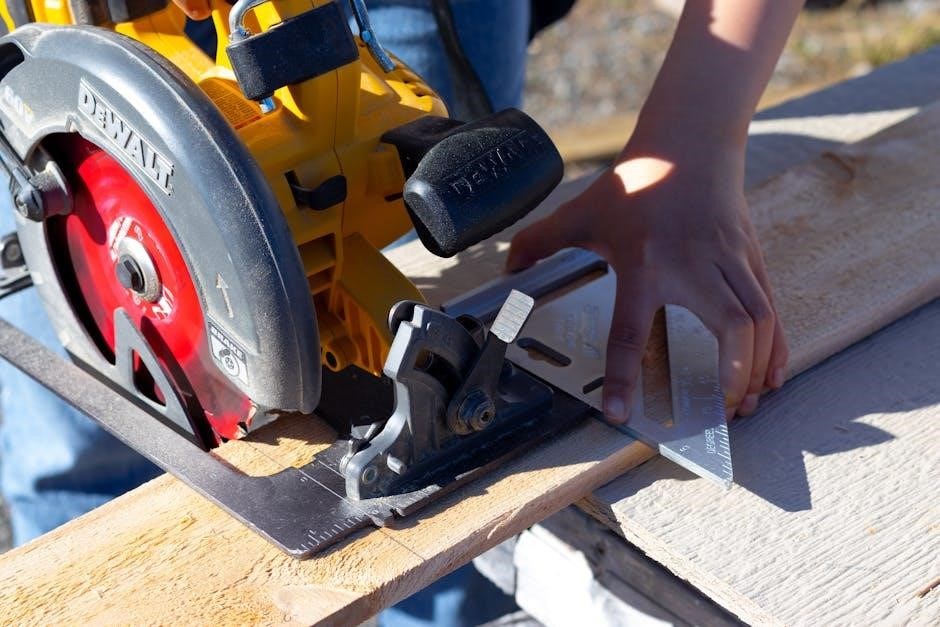
Regular maintenance extends your Ryobi miter saw’s lifespan. After each use‚ disconnect the power and remove sawdust using a brush or vacuum – avoid compressed air which can spread dust internally. Periodically lubricate moving parts‚ such as the pivot points and sliding rails‚ with a light machine oil.
Inspect the fence and support systems for debris and clean thoroughly. A clean saw operates more smoothly and accurately. Refer to your model’s manual (TS1351‚ TSS120L‚ etc.) for specific lubrication points. Proper cleaning and lubrication prevent rust and ensure consistent performance‚ aiding in accurate cuts and reducing wear.
Common Issues and Solutions
Ryobi miter saws‚ like any power tool‚ can encounter problems. A common issue is inaccurate cuts‚ often stemming from a loose blade or misaligned fence. Ensure the blade is securely tightened and the fence is properly adjusted. If the saw lacks power‚ check the power cord and circuit breaker. For models like BS-916B or TS1351‚ a faulty switch could be the culprit.
If the guard (MS1065LZ) is damaged‚ replace it immediately for safety. Refer to parts lists for replacements. Consistent maintenance‚ as outlined in the manual‚ prevents many issues. Always disconnect power before troubleshooting.
Ryobi Miter Saw Parts and Accessories
Maintaining your Ryobi miter saw relies on readily available parts and useful accessories. Replacement parts‚ crucial for models like TS1351 and TSS120L‚ can be sourced online‚ ensuring continued functionality. Essential accessories include miter saw stands for stability and mounting brackets for secure placement.
Dust collection systems are vital for a clean workspace‚ especially when dealing with materials that create significant debris. Specific parts‚ like the MS1065LZ guard replacement washer‚ are available to address wear and tear. Always reference your model number (e.g.‚ BS-916B) when ordering to guarantee compatibility.
Replacement Parts Sourcing
Finding replacement parts for your Ryobi miter saw is crucial for maintaining its performance and longevity. Online retailers frequently stock components for popular models like the TS1351‚ TSS120L‚ TSS121‚ and TSS121T. When sourcing parts‚ always prioritize using your specific model number – found on the motor housing – to ensure compatibility.

Specific items‚ such as the MS1065LZ miter saw guard replacement washer (compatible with Ridgid and Ryobi)‚ can be located through specialized parts suppliers. Parts lists and diagrams (like those for the S652DG sander or BGH6110SB grinder) can aid in identifying the correct component. Verify vendor reliability and return policies before purchasing.
Miter Saw Stands and Mounting Brackets
Enhancing the stability and portability of your Ryobi miter saw often involves utilizing dedicated stands or mounting brackets. These accessories transform a workshop tool into a more versatile asset‚ suitable for various job sites. Stands provide a secure base‚ improving cut accuracy and user safety.
Mounting brackets allow for semi-permanent installation onto workbenches or other surfaces. Information regarding Ryobi miter saw stand mounting brackets is available online‚ aiding in proper setup. Consider the saw’s weight and dimensions when selecting a stand or bracket to ensure adequate support. Proper mounting contributes to safer and more efficient operation.
Dust Collection Systems
Maintaining a clean and safe work environment when using a Ryobi miter saw is crucial‚ and dust collection systems play a vital role. These systems capture sawdust generated during cutting‚ reducing airborne particles and improving visibility. Some Ryobi models may lack a dedicated dust bag‚ necessitating the use of aftermarket solutions.
Connecting a shop vacuum or dust extractor to the saw’s dust port effectively removes debris. Proper dust collection not only enhances air quality but also prevents sawdust buildup within the saw’s mechanisms‚ contributing to its longevity. Explore available options to find a system compatible with your specific Ryobi miter saw model for optimal performance.
Ryobi TS1351 Miter Saw Specifics
The Ryobi TS1351 is a popular 10-inch compound miter saw known for its portability and user-friendly features. Accessing the parts list for this model is essential for maintenance and repairs‚ readily available online in a 4-page document. Understanding its specific components‚ like the guard and associated hardware‚ is key to safe operation.
Replacement parts‚ including the miter saw guard replacement washer (MS1065LZ‚ compatible with Ridgid models too)‚ can be sourced online. Familiarize yourself with the TS1351’s unique characteristics to maximize its performance and ensure accurate cuts. Proper maintenance‚ guided by the manual and parts diagrams‚ will extend its lifespan.
Ryobi TSS120L‚ TSS121‚ TSS121T Models
These Ryobi sliding compound miter saw models – TSS120L‚ TSS121‚ and TSS121T – share core functionalities but may have slight variations in features. Locating the correct documentation is crucial for effective use and repair. Online resources provide access to parts diagrams and manuals specifically tailored to these series.
Pay close attention to OEM-specific components‚ including the fence and guard assemblies. Understanding the differences between the models ensures you order the correct replacement parts. These saws are designed for versatility‚ handling a range of cutting tasks‚ and proper maintenance‚ guided by the manual‚ is vital for optimal performance and longevity.
Miter Saw Guard Replacement (MS1065LZ)
Replacing the miter saw guard‚ specifically the MS1065LZ model‚ is a critical safety procedure; This guard is compatible with both Ridgid and Ryobi saws‚ ensuring user protection during operation. The replacement process involves removing the old guard and securely installing the new one‚ often utilizing a washer (part number 503407000) for proper alignment and function.
Detailed parts lists and diagrams are available online‚ illustrating the correct assembly. Always disconnect the power source before attempting any repairs or replacements. A properly functioning guard is essential for preventing accidental contact with the blade‚ maintaining a safe working environment‚ and adhering to safety guidelines.